You will notice a big change in lifting power and speed if you change the corrosion-resistant stainless steel lift cylinder diameter. A bigger bore gives more strength, more force, and can lift heavier things. But, you need more hydraulic fluid to move a bigger piston. This can make the lift slower. The table below shows how bore size changes important things:
|
Metric |
Impact of Bore Diameter |
|---|---|
|
Strength |
Goes up as bore diameter gets bigger |
|
Force Output |
Gets higher with a larger bore diameter |
|
Load Capacity |
Can lift more with a bigger bore diameter |
|
Hydraulic Fluid Volume |
Bore diameter decides how much fluid is needed |
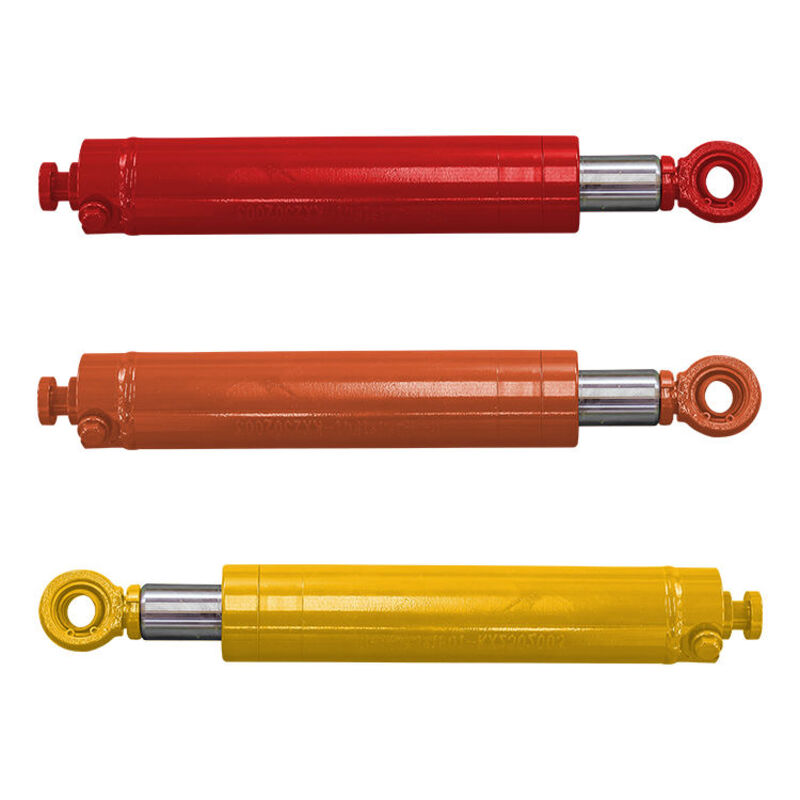
The high-performance long-stroke lift cylinder diameter helps show how strong a hydraulic cylinder is. If you make the diameter bigger, the piston area gets larger too. This gives the cylinder more lifting power. Pascal's principle explains why this happens.
Pascal's principle says that force and area are linked in hydraulics: F1/A1 = F2/A2. If the output cylinder area (A2) is bigger, the force (F2) also gets bigger.
The piston area matters because it multiplies the pressure from the hydraulic fluid. If you double the area, you also double the force. This is why lift cylinder diameter is very important in hydraulic math.
You can use easy math to find out how much weight a hydraulic cylinder can lift. Here are the steps:
Find the piston area:
Area = π × (Bore Diameter ÷ 2)²
Calculate the force:
For pressure in psi:
Force (lbs) = Pressure (psi) × Piston Area (in²)
If you need to think about the rod size for retraction, subtract the rod area:
Rod Area = π × (Rod Diameter ÷ 2)²
Let’s look at an example. You have two cylinders. One has a 2-inch bore. The other has a 3-inch bore. Both use 1000 psi.
2-inch bore:
Area = 3.14 in²
Force = 1000 psi × 3.14 in² = 3,140 lbs
3-inch bore:
Area = 7.07 in²
Force = 1000 psi × 7.07 in² = 7,070 lbs
A small increase in lift cylinder diameter gives much more lifting power. This is because the area grows faster as the diameter gets bigger.
The bore size tells you how much lifting force you get. Even a small change in bore size can make a big difference. The table below shows how bore size changes area and force at 100 psi:
|
Bore Size |
Area (sq in) |
Force at 100 PSI |
Relative Force |
|---|---|---|---|
|
1.5″ |
1.77 |
177 lbs |
1x |
|
2.0″ |
3.14 |
314 lbs |
1.8x |
|
2.5″ |
4.91 |
491 lbs |
2.8x |
|
3.0″ |
7.07 |
707 lbs |
4x |
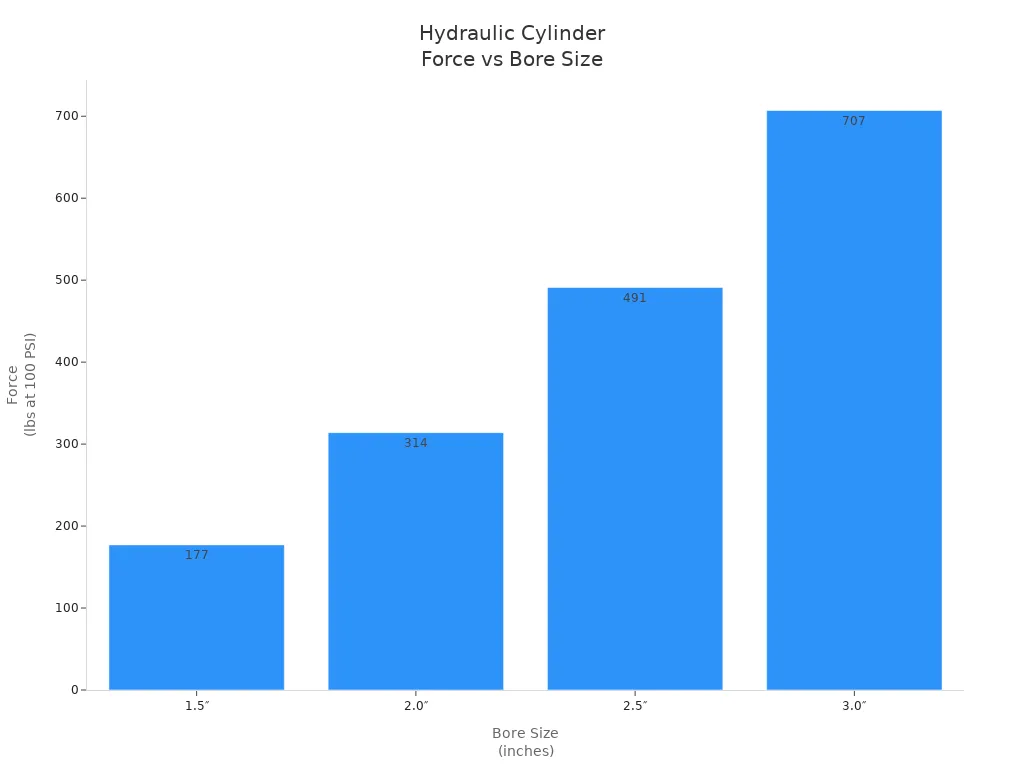
A 3-inch bore cylinder gives four times the force of a 1.5-inch bore. This is why bore size matters so much for hydraulic lifts. If you pick a bigger bore, you get more lifting power. For example, a 2-inch bore hydraulic cylinder at 2000 psi can give over 6,000 pounds of force. In real jobs, like dump trucks or tilt deck trailers, you must match the bore size to the weight you want to lift.
The force a hydraulic cylinder makes comes from system pressure and piston area. Since piston area grows with the square of the bore diameter, even a small bore increase gives much more force.
Choosing the right heavy duty lift cylinder for dump truck diameter keeps your hydraulic lift safe and working well. You will not overload the system. You will get the best results for your job.
When you make the diameter of a hydraulic cylinder bigger, the piston area gets bigger too. A bigger area lets the cylinder lift more weight, but it also means you need more hydraulic fluid behind the piston. If you want the piston to move the same distance, a bigger cylinder always needs more oil. This extra oil can make the lifting speed slower.
A bigger bore in a hydraulic cylinder needs more hydraulic oil, which can make the cylinder move slower.
A larger bore size makes the piston’s surface area bigger, so you need more hydraulic fluid to get the same pressure, and this changes how fast the cylinder moves.
You can see how diameter, area, and volume are connected in this table:
|
Parameter |
Formula |
|---|---|
|
Cylinder Volume |
Volume = Net Area (in²) x Stroke (in) / 231 |
|
Cylinder Area |
Area = π / (4 x Bore Diameter²) |
If you double the diameter, the area gets four times bigger. That means you need four times more fluid to move the piston the same distance. This is why a bigger cylinder can lift more but might move slower.
You have to balance lifting power and speed when you pick a hydraulic cylinder. A bigger diameter gives you more force because the area is larger. But the speed goes down because the system has to move more fluid.
Tip: Always use real load numbers from certified scales. Add at least 25% more for safety in case the load shifts or there is a mistake.
If you choose a cylinder that is too small, the system could fail, especially if the load moves while lifting. If you pick a cylinder that is too big, you get the force you want, but the speed drops. This can slow down your work and make your equipment less useful.
Here is a table that shows how fast different actuators move:
|
Actuator Type |
Extension Speed (inches per minute) |
Force Characteristics |
|---|---|---|
|
Hydraulic |
12-24 under load |
Varies with load |
|
Electric |
6-12 under load |
More stable |
Hydraulic cylinders can move faster than electric ones, but only if you match the area and fluid flow the right way. If the area is too big, you lose speed.
The hydraulic flow rate decides how fast the cylinder moves. If you use the same flow rate, a smaller cylinder moves faster because it has less area to fill. A bigger cylinder needs more oil to move the same distance, so it moves slower if the flow rate stays the same.
Think of a hydraulic system like a water pipe. If you fill a big bucket and a small cup with the same hose, the cup fills up faster. The big bucket takes longer because it has more space to fill. In a hydraulic system, the fluid volume stays the same. A small piston moves farther, while a big piston moves a shorter distance with the same fluid. This means making the cylinder diameter bigger gives more force but less speed.
Here is a formula that shows how flow rate and area change speed:
|
Parameter |
Formula |
|---|---|
|
Cylinder Velocity |
Velocity = 231 x Flow Rate (GPM) / (12 x 60 x Net Area (in²)) |
|
Extend Rate |
Extend Rate = Flow (gpm) * 231 / (Extend Area (in²) * 60) |
If you want the same speed with a bigger cylinder, you need more hydraulic flow. This might mean you need a bigger pump and stronger parts.
When you pick a cylinder, think about both the force you need and the speed you want. If you need high speed, you might need a smaller diameter or a better hydraulic system that gives more flow. If you need more lifting power, you might have to accept slower speed or get a bigger pump.
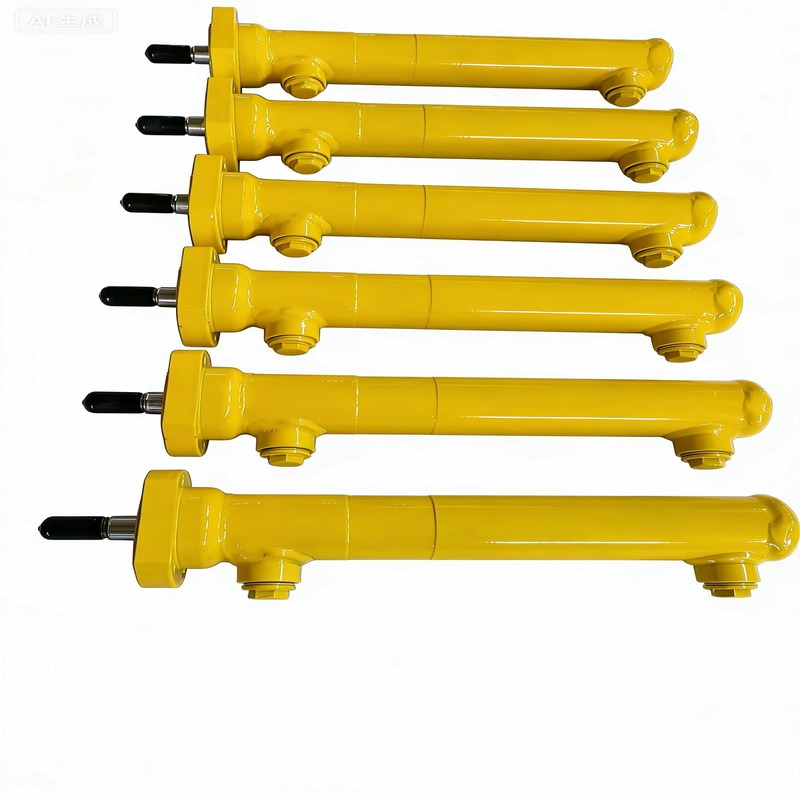
When you pick a hydraulic cylinder, safety is most important. You should add a safety factor of at least 25% to your math. This extra amount helps with friction, pressure drops, and surprise changes in load. You also need to plan for the heaviest loads, not just the usual ones. Pick a cylinder with a tonnage rating that is at least 20% more than what you need to lift. Safety margins, pressure ratings, and design rules keep you and your equipment safe.
Key safety tips:
Add a safety factor of 25% or more.
Plan for peak loads, not just average loads.
Check all pressure ratings and design standards.
Tip: Never guess your lifting needs. Use real numbers and always round up for safety.
The material and build of your hydraulic cylinder affect how well it works and how long it lasts. You need to think about the piston area, bore diameter, and the longest stroke. The shape and design of each part are important. Common materials are steel, stainless steel, aluminum, and composites. Each one has good and bad points. Where you use the cylinder, what fluid you use, and the temperature also matter a lot.
Makers use special steps like careful machining, welding, honing, and surface treatments to make sure the cylinder fits your lifting needs. If you skip these things, the cylinder can wear out fast or even break.
Checklist for material selection:
Match material to operating environment and fluid.
Confirm bore diameter and area meet your needs.
Check manufacturing quality and surface finish.
Many people make mistakes when picking a hydraulic cylinder size. One mistake is mixing up pressure and flow. Some think a bigger pump always gives more force, but area and pressure are more important. Another mistake is not sizing the reservoir right, which can cause cooling and dirt problems. Not checking the rod strength or how it mounts can make the rod bend or not line up right.
If the piston-rod diameter is too small, it gets more stress and wears out faster. If you guess the load or pressure, you might choose a cylinder that cannot do the job. If you guess too low, the cylinder will not make enough force. If you guess too high, you get a bigger, heavier cylinder that costs more and slows down your work. The right area and diameter help keep costs and repairs low.
Common mistakes to avoid:
Confusing pressure with flow.
Not checking reservoir size.
Ignoring rod strength and mounting.
Guessing load or pressure instead of measuring.
Using outdated technology or poor filtration.
Note: Always follow a step-by-step process. Figure out your lifting needs, check the area and bore size, and ask experts if you need help.
|
Factor |
Why It Matters |
|---|---|
|
Operating Pressure |
Affects safety and lifting capacity |
|
Cylinder Size |
Changes force output and speed |
|
Area Calculations |
Key for matching force to lifting requirements |
|
Material Properties |
Impacts strength and durability |
|
Maintenance |
Reduces long-term costs and downtime |
You saw that a larger lift cylinder diameter gives you more lifting power but slows down the speed.
A bigger bore increases the piston area, so your hydraulic system can lift heavier loads.
More area means you need more oil, which can slow the lift.
To choose the right cylinder:
Find the weight you need to lift.
Use the formula to calculate the bore size.
Pick a rod size that matches your stroke and strength needs.
Remember, hydraulic lifts in shops and factories use these rules every day. Apply the formulas and tips to get safe, strong, and efficient results.
|
Factor |
Lifting Capacity |
Speed Impact |
|---|---|---|
|
Larger Bore |
Higher |
Slower |
|
Pump Flow Rate |
Not affected |
Faster with more GPM |
You get more lifting power, but the cylinder moves slower. You also need a bigger pump and more oil. This can make your system cost more and use more energy.
No. A bigger cylinder gives more force but reduces speed. You must balance lifting power and speed for your job. Bigger is not always better.
Yes. You can use a pump with a higher flow rate. More flow moves the piston faster. Make sure your system can handle the extra flow.


 IPv6 network supported |
Sitemap |
Xml |
blog |
Privacy Policy
IPv6 network supported |
Sitemap |
Xml |
blog |
Privacy Policy

 en
en